A short guide to natural dyes
Thursday, September 3, 2026
Cochineal, indigo, marigold and moss: where the colors in Zapotec rugs come from.
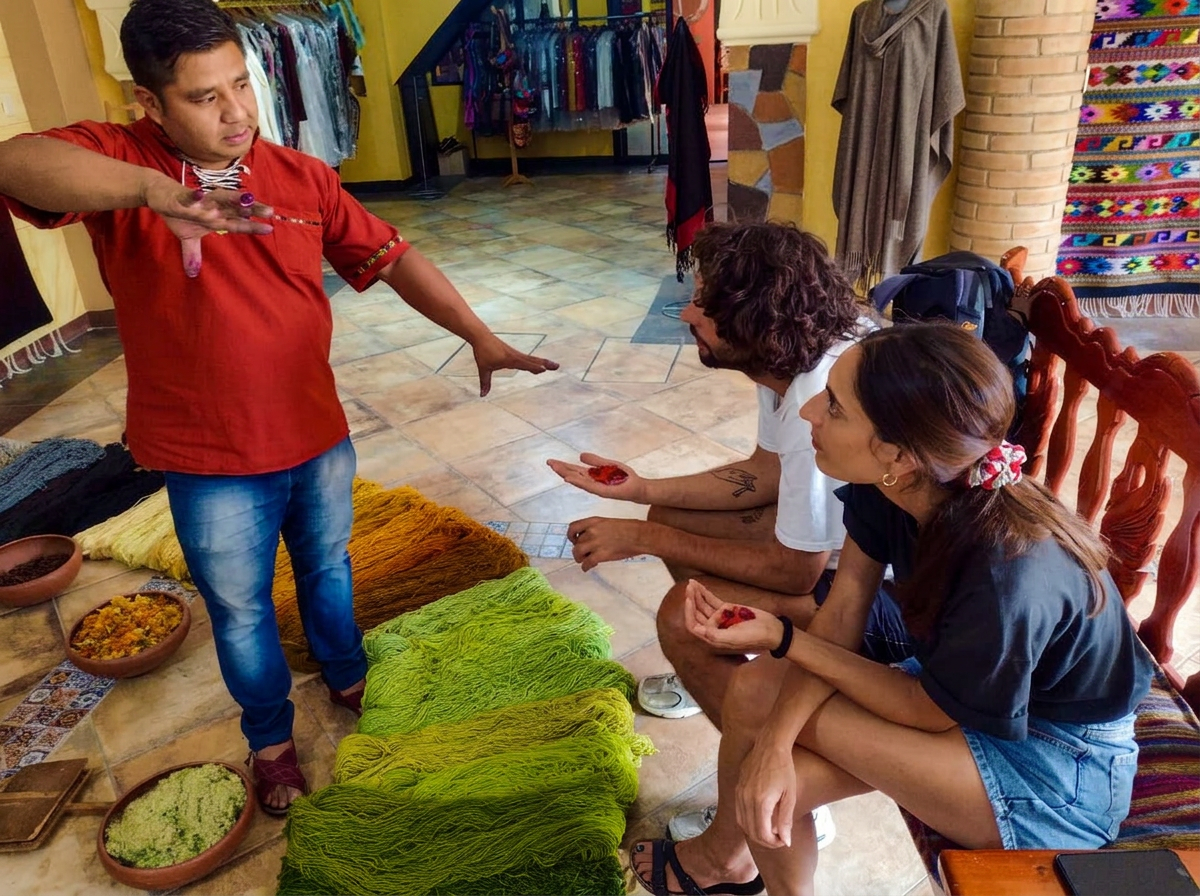
Colors in Teotitlán are not bought in tubes. They are built from plants, insects and minerals, in recipes that families here have guarded for generations. Before a single thread touches the loom, it may spend days in a dye bath — and understanding that changes how you look at every rug in the village.
The most famous color is red, from the cochineal insect that lives on the nopal cactus. Crushed and dried, a handful of these tiny insects can dye an entire skein of wool. Add lime juice and the red turns toward orange; add wood ash and it deepens toward purple. One insect, a dozen colors.
Blue comes from indigo, prepared in a fermentation vat that smells sharp and earthy. The wool goes in greenish and only turns blue as it meets the air — weavers say the color arrives by magic, and watching it happen, you almost believe them.
The yellows and golds come from marigold flowers gathered after Día de Muertos, from pericón, and from moss pulled off the trees in the mountains. Browns and blacks come from walnut husks and the zapote fruit. Nearly every color you see in a Teotitlán rug was growing somewhere nearby a few weeks before.
When you visit a weaving family, ask to see the dye pots before the loom. The moment you understand that the colors are alive — that they come from the hills and fields around you — the rugs stop being souvenirs. They become a map of the valley, woven in wool.